What It Costs, Why, and How It’s Reshaping Deals
August 2026 | FloridaCommercialRealEstateNews.com
Commercial property insurance in Florida generally costs two to four times the national average, with wind-exposed coastal assets often paying several dollars per square foot annually and South Florida multifamily owners commonly paying in the low-to-mid four figures per unit per year. Premiums remain far above pre-2022 levels even as the market stabilizes, and insurance now ranks alongside property taxes as one of the largest operating expenses on most Florida commercial buildings.
That is the short answer. The longer answer is that insurance has become the variable that decides whether Florida deals close at all. What follows is a general guide to what owners are paying in 2026, the forces setting those prices, how lenders now underwrite insurance, and the questions brokers and investors ask most. Figures throughout are broad estimates drawn from public reporting, regulatory data, and market commentary — actual quotes vary enormously by construction, vintage, location, and loss history, and owners should treat their own bound quotes as the only reliable number for a specific asset.
What Florida Commercial Insurance Generally Costs in 2026
Precise, market-wide pricing data does not exist in public form — premiums are negotiated privately and vary widely — but the broad contours of the market are well established:
Coastal versus inland is the defining spread. A wind-exposed asset in Miami-Dade, Broward, Palm Beach, or coastal Southwest Florida typically costs a multiple — often two to four times — of what a comparable inland asset in Orlando or along the I-4 corridor pays. The difference is driven almost entirely by hurricane exposure and reinsurance loading, not by any difference in fire, liability, or crime risk.
Multifamily has been hit hardest. South Florida apartment owners have widely reported per-unit insurance costs climbing from a few hundred dollars per unit a decade ago into the range of roughly $1,500 to $5,000+ per unit annually for coastal product by the mid-2020s, depending on vintage and construction. Inland garden-style product built to modern code sits well below that range.
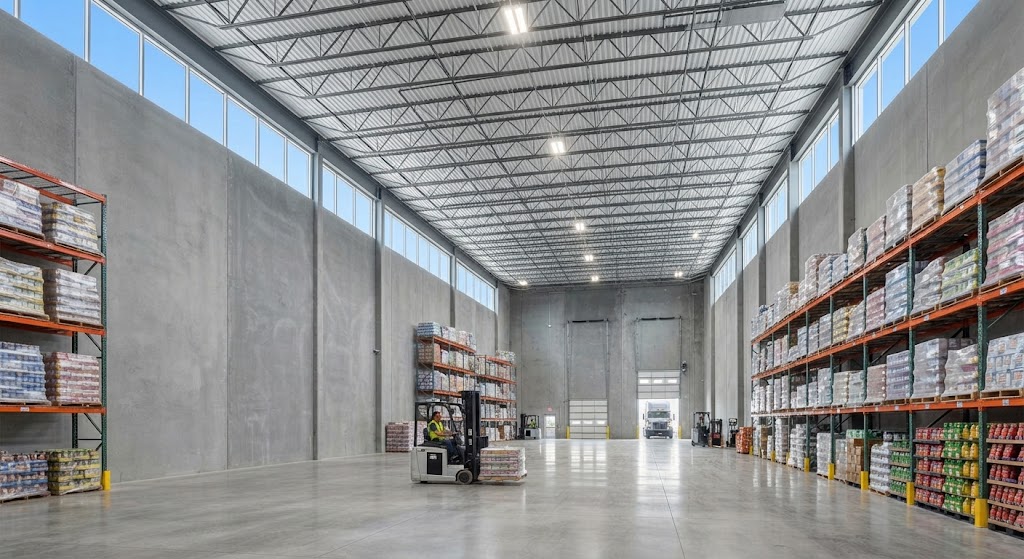
Office, industrial, and retail vary by construction more than by use. Modern tilt-wall industrial built to post-2002 Florida Building Code standards is among the cheapest product in the state to insure. Older strip retail and pre-1994 office product near the coast is among the most expensive, and in some cases struggles to find standard-market coverage at all.
The vintage penalty is severe. Buildings constructed before the 2002 statewide building code — and especially pre-Hurricane Andrew (1992) construction — routinely pay substantial premiums over newer product, when carriers will quote them at all. Owners of older coastal assets are frequently pushed into the surplus-lines market or Citizens, the state-backed insurer of last resort.
The trajectory: violent escalation, then plateau. Florida commercial premiums roughly doubled — and for some coastal assets far more than doubled — between 2020 and 2024. Since then, the market has moderated: rate increases have slowed markedly, well-built inland assets are seeing flat or even slightly reduced renewals as new carriers compete for the best risks, and the panic pricing of 2022–2023 has passed. But moderation is not rollback. Almost no wind-exposed asset is paying anything close to its pre-2022 premium, and there is little expectation it ever will.
The one-sentence summary: Florida commercial property insurance stabilized in 2025–2026, but at a permanently higher base — the state has repriced wind risk, not reversed it.
Why It Costs What It Costs: Five Forces
1. Reinsurance sets the floor. Florida carriers depend heavily on global reinsurance, and reinsurance pricing hardened dramatically after Hurricane Ian in 2022 — one of the costliest insured-loss events in U.S. history, with insured losses generally estimated in the range of $50–60 billion. Those costs flow directly into primary premiums. Reinsurance renewals have softened somewhat since, which is the main reason primary rates have calmed, but the reset base remains far above the prior decade’s norms.
2. Litigation reform changed the market’s structure. Florida’s legislative special sessions in late 2022 and 2023 — most notably SB 2-A — eliminated one-way attorney fees and curbed assignment-of-benefits abuse that had made Florida a national outlier in property insurance litigation. The results by 2025–2026 are visible: claims litigation fell sharply, more than a dozen new carriers entered or expanded in the state, and Citizens has been steadily depopulating policies back to the private market from its peak of well over a million policies. More carriers quoting a given risk disciplines pricing even where rates haven’t fallen.
3. Wind deductibles quietly restructured who bears the risk. Headline premiums understate what owners now retain. Named-storm deductibles of 3% to 5% of insured value are standard in Florida, and higher retentions are common on coastal product. On a $50 million building, a 5% wind deductible means the owner self-insures the first $2.5 million of every named-storm loss. Buyers, tenants, and lenders are all repricing around that retained exposure, not just the premium line.
4. Insured values caught up to replacement costs. Carriers spent the early 2020s forcing insured values up to true replacement cost after years of widespread underinsurance — construction cost inflation made the gap impossible to ignore. That revaluation compounded rate increases on the same renewals. The catch-up is now largely complete, which is another reason recent renewals look calmer than the raw rate environment of a few years ago.
5. Flood is a separate and growing line. Wind and flood are distinct coverages. Lenders require flood insurance in FEMA special flood hazard areas, typically layered from the National Flood Insurance Program up through private excess coverage, and FEMA’s Risk Rating 2.0 methodology continues to push flood pricing toward full actuarial levels. For low-lying commercial corridors, flood is a slow-motion cost escalator independent of the wind market.
How Lenders Underwrite Florida Insurance in 2026
Insurance has moved from a closing checklist item to a core underwriting input, and this shift — more than the premiums themselves — is what changes deal outcomes.
Insurance is stressed, not taken as-is. Lenders increasingly size loans using projected renewal premiums rather than the seller’s in-place cost, particularly on coastal assets. Deals that penciled at a legacy premium frequently re-trade once the buyer’s actual quote arrives; insurance re-quotes are widely cited by Florida brokers as a leading cause of price renegotiations, alongside interest rates.
Deductible caps in loan documents. Agency, CMBS, and many bank lenders cap acceptable wind deductibles — commonly around 5% — and want borrowers to demonstrate liquidity against the retained layer. Owners who take very high deductibles to manage premium can inadvertently make their asset harder to finance or sell.
Carrier quality is scrutinized again. After a wave of Florida-domestic carrier insolvencies in the early 2020s, lenders pay close attention to carrier financial strength ratings and are warier of unrated or thinly rated paper behind senior debt.
Insurance contingencies have entered purchase contracts. Florida purchase agreements increasingly include the buyer’s right to exit or reprice if bindable coverage exceeds an underwritten cost — a clause that was rare a few years ago and is now a familiar feature of coastal transactions.
What It Means Deal by Deal
Valuations have bifurcated by wind exposure. Two otherwise comparable buildings — one inland, one coastal — no longer trade at the same cap rate, because their expense loads and expense volatility differ structurally. Market participants routinely describe a meaningful cap-rate spread attributable to insurance alone.
Older coastal product carries the real distress. The vintage penalty compounds: higher premiums, fewer willing carriers, lender caution, and — on condo and condo-adjacent product — the cost of post-Surfside milestone inspections and reserve requirements. This is where Florida’s genuine insurance-driven distress is concentrated. New Class A construction, by contrast, insures relatively efficiently and has weathered the crisis far better than headlines suggest.
Mitigation now pencils as an investment. Roof replacement, opening protection, and secondary water barriers can move wind premiums enough to justify the capital expense on their own, particularly on 1980s–1990s vintage assets. “Insurance-driven capex” is becoming a standard line in Florida value-add underwriting, and buyers increasingly commission wind-mitigation inspections during diligence the way they always have property condition reports.
Frequently Asked Questions
How much does commercial property insurance cost in Florida in 2026? There is no single number — quotes vary enormously — but Florida commercial property insurance generally runs two to four times national averages. Modern inland industrial and office product sits at the low end; older, wind-exposed coastal assets sit at the high end, often paying several dollars per square foot annually, with coastal multifamily commonly in the four figures per unit per year.
Are Florida commercial insurance rates going down in 2026? Increases have decelerated materially, and well-built inland assets are seeing flat or modestly improved renewals as new carriers compete for the best risks. But premiums remain far above pre-2022 levels, and older coastal product is still under pressure. The market has stabilized at a higher base rather than rolled back.
What is a typical wind deductible on Florida commercial property? Named-storm deductibles of 3% to 5% of total insured value are standard, with 5% most common on coastal assets. Many lenders cap acceptable deductibles at around 5% in loan documents, which limits how much premium owners can buy down through higher retentions.
Can you still get insurance on older coastal buildings in Florida? Usually, but at a steep price and often through surplus-lines carriers or Citizens rather than the standard market. Pre-2002 — and especially pre-Andrew — construction faces the highest costs and the fewest willing carriers. Documented mitigation, above all a new roof, materially widens the market for these assets.
Why did Florida insurance get so expensive in the first place? A collision of forces: decades of outsized litigation costs unique to Florida, major hurricane losses culminating in Ian in 2022, a global reinsurance repricing, carrier insolvencies that shrank capacity, and insured-value corrections driven by construction cost inflation. Legislative reform has addressed the litigation component; the wind risk is permanent.
How do lenders treat insurance when underwriting Florida CRE loans? As a stressed operating expense. Many lenders size debt service coverage using projected renewal premiums, cap wind deductibles, require rated carriers, and require flood coverage in FEMA flood zones. On coastal assets, high insurance costs now directly reduce loan proceeds.
The Bottom Line
Insurance is no longer a line item in Florida commercial real estate — it is a location factor, a financing constraint, and a valuation input as fundamental as rent. The market is genuinely healthier than it was in 2023: litigation reform brought carriers back, competition returned for well-built assets, Citizens is shrinking, and panic pricing has passed. But the state has permanently repriced wind risk, and the spread between insuring a new inland warehouse and a 1980s beachfront strip center now shapes where capital flows in Florida. Owners underwriting today should assume the current cost structure is the new normal — and treat mitigation, construction quality, and elevation as the levers that actually move the number.
Sources and further reading: Florida Office of Insurance Regulation market reports (floir.com); Citizens Property Insurance Corporation policy count and depopulation data; Florida Senate — SB 2-A (2022 Special Session) and related reforms (flsenate.gov); FEMA National Flood Insurance Program and Risk Rating 2.0 (fema.gov); Insurance Information Institute Florida analyses (iii.org); Swiss Re Institute and Munich Re catastrophe loss reports.
About the Author