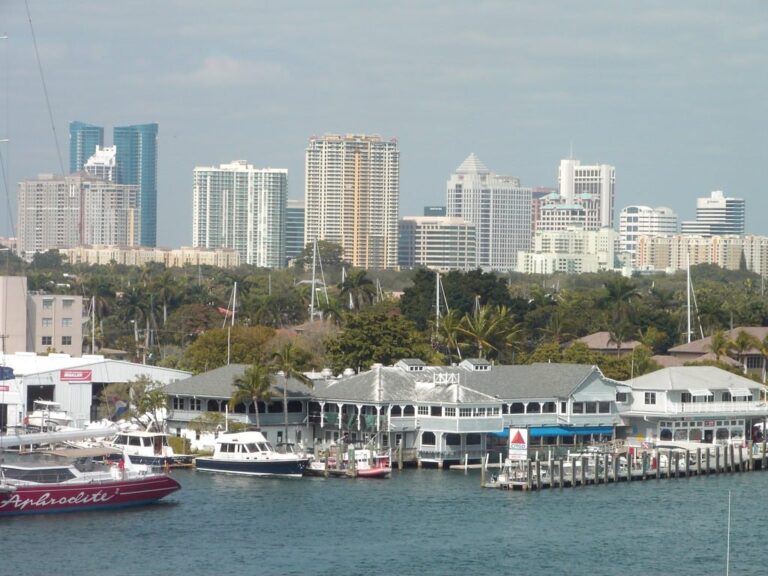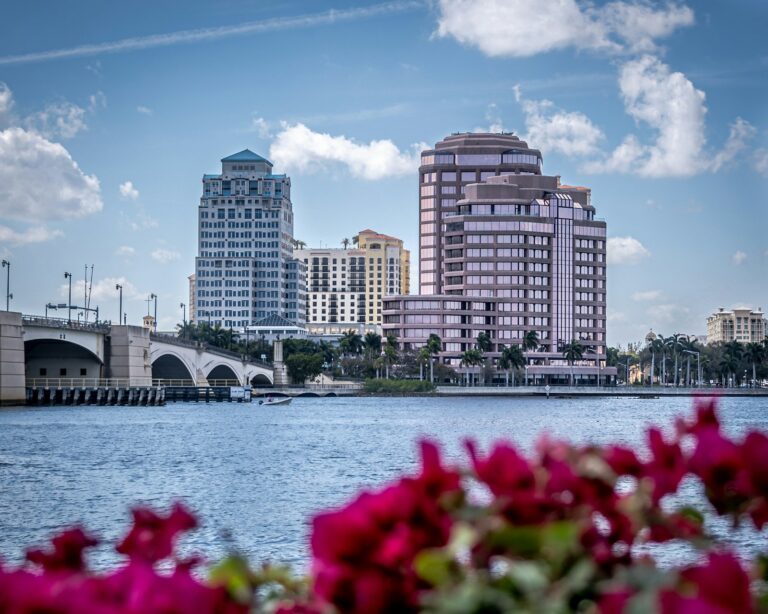
A modern glass office tower. Photo: Kenrick Baksh via Unsplash, used under the Unsplash License.
Quick Answer: Tampa Bay’s office vacancy rate fell to 18.1% in the third quarter of 2026, its lowest level since late 2021, as the market absorbed about 212,000 square feet of space, according to Cushman & Wakefield. Overall asking rents reached a record $33.50 per square foot, and with almost no new construction underway, landlords of quality buildings are gaining pricing power.
Tampa Bay’s office market has spent the past several years working through the same questions as the rest of the country: how much space companies need after the shift to hybrid work, which buildings will stay competitive and whether new construction still makes sense. The third-quarter 2026 data suggests the region is moving past the worst of that adjustment.
Three brokerage reports released in October describe a market where occupancy is improving, demand is concentrated in high-quality space and new supply is scarce. This article pulls together the numbers from Cushman & Wakefield, CBRE and Lee & Associates to show where the Tampa Bay office market stands and where it may be heading.
What is the Tampa Bay office vacancy rate in 2026?
According to Cushman & Wakefield’s third-quarter 2026 MarketBeat, Tampa Bay’s overall office vacancy rate was 18.1%, down 50 basis points from the prior quarter and 100 basis points from a year earlier. That is the lowest vacancy rate since the fourth quarter of 2021, and it is below the firm’s national office vacancy rate of 20.0%.
CBRE’s third-quarter figures reached the same conclusion, describing overall vacancy at its lowest level since early 2022.
| Measure | Q3 2026 | Change from Q3 2025 |
|---|---|---|
| Overall vacancy | 18.1% | -100 bps |
| Class A vacancy | 16.4% | -130 bps |
| Class B vacancy | 20.5% | -50 bps |
| Hillsborough County vacancy | 18.5% | -120 bps |
| Pinellas County vacancy | 16.6% | -30 bps |
| Westshore vacancy | 14.9% | -320 bps |
| Tampa CBD vacancy | 15.4% | +80 bps |
| U.S. office vacancy | 20.0% | n/a |
Source: Cushman & Wakefield, Tampa Bay Office MarketBeat, Q3 2026.
Different brokerages define the market and its inventory differently, so their vacancy rates do not match exactly. Lee & Associates, for example, reported Tampa Bay office vacancy of 13.13% in the third quarter, down from 13.50% in the second quarter, using a different building set. The direction, however, is consistent across the reports: vacancy is falling.
How much office space did Tampa Bay absorb?
Cushman & Wakefield reported about 212,000 square feet of positive net absorption in the third quarter, bringing year-to-date absorption to about 265,000 square feet. That compares with national net absorption of only about 50,000 square feet in the quarter, meaning Tampa Bay alone absorbed roughly four times the national figure in the firm’s data.
Class A space did most of the work. About 166,000 square feet, or 78.3% of the quarter’s absorption, came from Class A buildings.
CBRE said absorption over the past year has been healthy and represents the strongest stretch of occupancy growth since 2018. Lee & Associates reported trailing 12-month net absorption of 233,217 square feet in the third quarter, up sharply from 18,251 square feet a year earlier, and described “stronger demand momentum in Q3 2026.”
Which submarkets gained and lost tenants?
Absorption was concentrated in suburban and Pinellas submarkets, while the two downtowns lost occupancy.
| Submarket | Q3 2026 net absorption |
|---|---|
| Westshore | About 108,000 sf |
| I-75 Corridor | About 65,000 sf |
| Bayside (Pinellas) | About 47,000 sf |
| St. Petersburg Downtown | About -6,000 sf |
| Tampa CBD | About -15,000 sf |
Source: Cushman & Wakefield, Tampa Bay Office MarketBeat, Q3 2026.
Westshore has been the standout. Its vacancy fell to 14.9%, down 320 basis points from a year earlier, after peaking at 19.2%. CBRE noted that downtown submarkets recently posted rare occupancy losses as larger users right-sized their footprints, while demand has broadened and several suburban locations are gaining momentum.
How does Q3 compare with earlier in 2026?
The third quarter’s gains followed a softer spring. CBRE’s second-quarter 2026 report showed metro-wide net absorption of negative 96,000 square feet and year-to-date absorption of about negative 66,000 square feet at midyear, with total vacancy of 19.9% in its own market definition. CBRE said at the time that leasing had slowed in early 2026 after a strong first half of 2025 and that Class B buildings accounted for most of the occupancy losses.
The first quarter was positive. Tampa Bay Business & Wealth reported in April that regional vacancy fell to 18.2% in the first quarter, with nearly 115,000 square feet of net absorption. It also reported a 56,000-square-foot Philip Morris International lease in Westshore during that quarter.
| Period | Key absorption reading | Vacancy reading | Source |
|---|---|---|---|
| Q1 2026 | Nearly 115,000 sf | 18.2% | Tampa Bay Business & Wealth |
| Q2 2026 | -96,000 sf | 19.9% (CBRE definition) | CBRE |
| Q3 2026 | About 212,000 sf | 18.1% | Cushman & Wakefield |
Because the three sources use different building sets, the vacancy figures should be compared with caution. The pattern still shows a dip in the second quarter followed by a strong rebound in the third.
Is sublease space shrinking?
Yes. CBRE’s second-quarter report said total sublease availability had fallen to about 1.6 million square feet, the lowest since the onset of the pandemic in 2020, and its third-quarter update said sublease availability continued to decline. Less sublease space means fewer discounted options for tenants and less competition for landlords marketing direct space.
How much are Tampa Bay office rents?
Cushman & Wakefield reported an overall average asking rent of $33.50 per square foot, up 2.3% from a year earlier and a record for the market. Class A asking rents rose 5.3% to $37.14, while Class B rents slipped 0.6% to $29.92.
| Rent measure | Q3 2026 asking rent | Year-over-year change |
|---|---|---|
| Overall | $33.50 psf | +2.3% |
| Class A | $37.14 psf | +5.3% |
| Class B | $29.92 psf | -0.6% |
| Westshore Class A | $46.76 psf | +5.1% |
| Tampa CBD Class A | $44.80 psf | -3.6% |
| St. Petersburg Downtown premium | $49.97 psf | +7.9% |
| Ybor City Class A | $64.00 psf | +52.4% |
| Pinellas County overall | $30.96 psf | +11.3% |
Source: Cushman & Wakefield, Tampa Bay Office MarketBeat, Q3 2026.
The gap between Class A and Class B performance is one of the clearest themes in the data. Tenants are paying more for the best buildings while older space struggles to raise rents. CBRE added that rent growth has moderated overall as the influence of premium new construction fades from market averages.
CBRE also reported in the second quarter that top-of-market rents in existing buildings exceed $75 per square foot on a gross basis, and that developers’ early discussions suggest $80 to $90 per square foot for future deliveries. True top-tier buildings made up 22% of inventory but only 15% of available space, the lowest share since mid-2020, according to CBRE.
Lee & Associates reported an average asking rent of $36.52 per square foot in the third quarter, up $0.74 from the second quarter but slightly below $36.81 a year earlier.
Is new office space being built in Tampa Bay?
Very little. Cushman & Wakefield reported just one office project under construction in the market, with no completions so far in 2026. That project, Gas Worx in Ybor City, totals 98,570 square feet and is slated for delivery in the fourth quarter. Proposed projects total about 978,000 square feet, but none have started on a speculative basis.
CBRE said virtually all recently delivered and under-construction space is now leased, and that the shortage of high-quality, first-generation space should continue to support well-positioned assets. It added that several long-discussed development projects appear to be gaining traction, but meaningful new supply is still years away. In its second-quarter report, CBRE estimated that deliveries from those projects could arrive between late 2028 and 2030, possibly without the heavy preleasing requirements of the last cycle.
At the same time, the market is losing older inventory. Tampa Bay Business & Wealth reported in April that more than 1 million square feet of office inventory had been removed over the prior year through redevelopment and conversion. Cushman & Wakefield noted that investment is shifting toward repositioning existing assets into mixed-use developments with smaller office components.
| Supply measure | Figure | Source |
|---|---|---|
| Projects under construction | 1 | Cushman & Wakefield |
| Gas Worx (Ybor City) size | 98,570 sf, Q4 delivery | Cushman & Wakefield |
| Proposed projects | About 978,000 sf | Cushman & Wakefield |
| Speculative starts | None | Cushman & Wakefield |
| Under construction (Lee market definition) | 142,875 sf | Lee & Associates |
| Inventory removed over prior year (as of Q1) | More than 1 million sf | Tampa Bay Business & Wealth |
What are investors paying for Tampa Bay office buildings?
Lee & Associates reported an average office sale price of $214 per square foot in the third quarter, up from $204 a year earlier, and an average cap rate of 8.53%.
Its list of top third-quarter sales shows a wide range of pricing. A 130,487-square-foot Class B building at 2002 N. Lois Ave. in Tampa sold for $13.3 million, or about $102 per square foot. A 33,822-square-foot building at 3440 W. Dr. Martin Luther King Jr. Blvd. sold for about $15.6 million, or about $460 per square foot, as part of a portfolio sale. A 20,330-square-foot building at 600 S. Magnolia Ave. sold for $5.4 million, or about $266 per square foot.
Who signed major office leases in Tampa Bay?
Lee & Associates listed three of the quarter’s largest leases:
| Address | Size | Tenant |
|---|---|---|
| 1301 E. 4th Ave., Tampa | 50,570 sf | Ferguson Plumbing & HVAC Supply |
| 8800 Hidden River Pkwy., Tampa | 33,000 sf | Pike Electric |
| 6801 E. Hillsborough Ave., Tampa | 30,230 sf | Early Learning Coalition of Southwest Florida |
Source: Lee & Associates, Tampa Bay Office Q3 2026.
Overall leasing volume, however, has cooled from last year’s elevated level. Cushman & Wakefield reported more than 541,000 square feet of new deals in the third quarter, but year-to-date leasing of 1.8 million square feet was down 34.1% from 2.8 million square feet a year earlier. Renewals, at about 308,000 square feet in the quarter, rose 5.3% from a year earlier, suggesting many tenants are choosing to stay put.
What does this mean for tenants and landlords?
The third-quarter data points to several practical takeaways for companies and property owners in Tampa Bay:
- Tenants in Class A space have less leverage. Class A vacancy fell to 16.4% and Class A rents rose 5.3%, so renewal negotiations in top buildings may be tougher than a year ago.
- Class B space still offers value. Class B vacancy remains above 20% and rents slipped, giving cost-conscious tenants more options.
- Suburban locations are competitive. Westshore, the I-75 Corridor and Pinellas led absorption, while both downtowns lost occupancy in the quarter.
- New space will be scarce for years. With one project under construction and future deliveries estimated for late 2028 to 2030, companies needing large blocks of new space may face limited choices.
- Older buildings face pressure to reposition. Conversions and mixed-use redevelopment are already removing obsolete office inventory.
Brian’s Take
The number that jumps out at me is not the vacancy rate. It is the construction pipeline. One project under construction, no completions this year and no speculative starts, in a region that just absorbed about four times the national figure in a single quarter.
When demand improves and supply is frozen, the best buildings get the pricing power first. That is exactly what the data shows: Class A rents up 5.3%, Class B rents slightly down, and Westshore vacancy down more than three points. For Tampa Bay business owners with a lease coming up in a quality building, the window for easy concessions appears to be narrowing.
Frequently Asked Questions
What is the office vacancy rate in Tampa Bay?
Cushman & Wakefield reported an overall Tampa Bay office vacancy rate of 18.1% in the third quarter of 2026, the lowest since the fourth quarter of 2021.
How much does office space cost in Tampa Bay?
The overall average asking rent was $33.50 per square foot in the third quarter of 2026, a record, and Class A space averaged $37.14 per square foot, according to Cushman & Wakefield.
Which Tampa Bay office submarket is strongest?
Westshore led third-quarter absorption with about 108,000 square feet and saw vacancy fall to 14.9%, down 320 basis points from a year earlier.
Is new office construction happening in Tampa Bay?
Only one project, the 98,570-square-foot Gas Worx in Ybor City, was under construction in the third quarter, with no speculative projects started.
Is Tampa Bay sublease space declining?
Yes. CBRE reported in the second quarter that sublease availability had fallen to about 1.6 million square feet, the lowest since 2020, and said in its third-quarter update that it continued to decline.
Why do vacancy rates differ between brokerages?
Each firm tracks a different set of buildings and market boundaries. Cushman & Wakefield reported 18.1% vacancy, while Lee & Associates reported 13.13% using its own market definition.
Sources and Further Reading
- Tampa Bay Office MarketBeat, Q3 2026 — Cushman & Wakefield
- Tampa Office Figures, Q3 2026 — CBRE
- Tampa Bay, FL Office Market Report, Q3 2026 — Lee & Associates
- Tampa Bay Office Vacancy Hits Four-Year Low — Tampa Bay Business & Wealth
About the Author