By Brian French | Florida Authority Network | September 10, 2026
Quick Answer
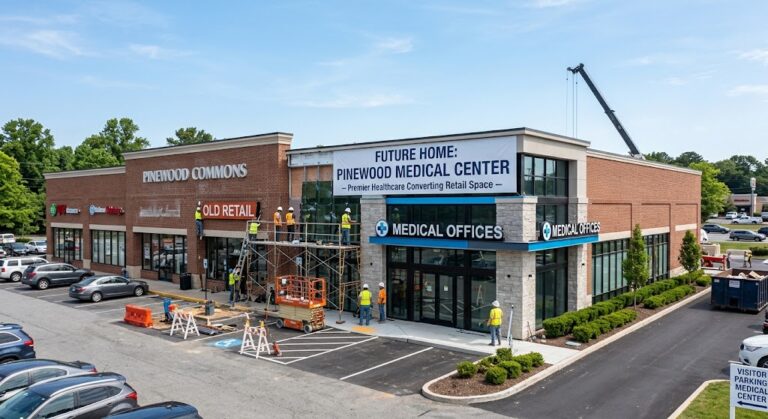
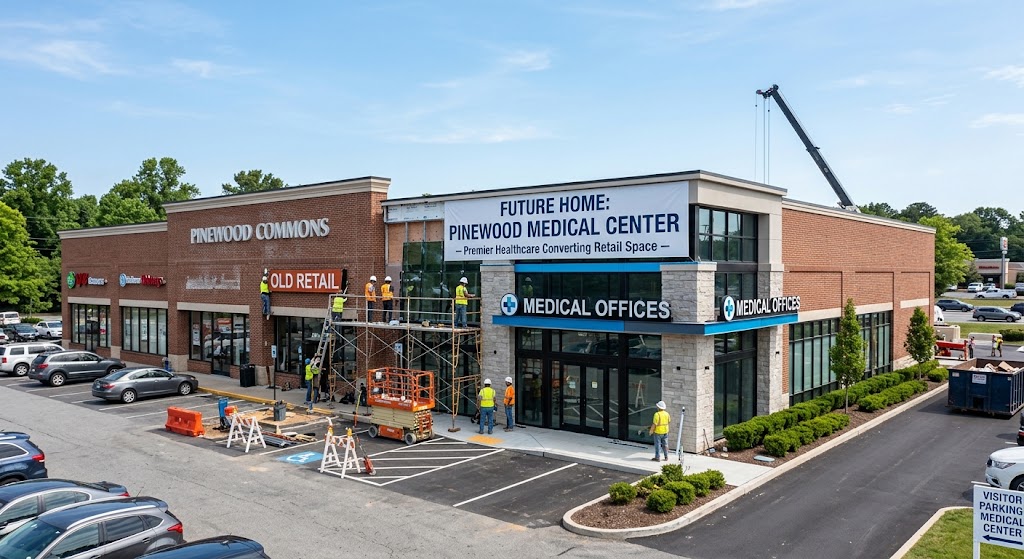
Medical tenants are moving into Florida retail centers because retail vacancy is near record lows, medical office space is even tighter, and an aging patient base wants care close to where it already shops. Converting retail to medical office in Florida is usually a change-of-use question, not a rezoning question: the tenant must clear local parking ratios (typically 5–6 spaces per 1,000 SF versus 4–5 for retail), a Florida Building Code occupancy review, and state licensing (AHCA) for anything beyond a standard physician office.
Why Medical Tenants Are Choosing Florida Retail Centers
Medtail is growing in Florida because three pressures line up at once: an unusually tight retail market, an even tighter medical office market, and a Medicare-age population that rewards convenience. Landlords get credit tenants on long leases; providers get parking, signage, and visibility that hospital campuses cannot match. The result is a tenant category that now anchors centers.
The supply squeeze on both sides. Florida retail is among the tightest in the country. South Florida recorded 508,000 square feet of positive net absorption in Q2 2026 while holding a 3.5% vacancy rate, with asking rents averaging $36.50 per square foot. Tampa’s retail vacancy measured 3.9% in Q2 2026, and Orlando sat at 3.9% in Q1. Medical office is tighter still: Miami-Dade’s medical office vacancy improved to 6.1% in Q1 2026, with direct gross rents reaching a record $47.09 per square foot, up 7.0% year-over-year.
The demographic driver. Roughly one in five Floridians is 65 or older, and that cohort schedules more visits per year than any other. The Medicare-eligible population is now the largest cohort in U.S. history, and patients increasingly refuse to drive twenty minutes to a hospital campus for what could be a fifteen-minute visit.
The regulatory tailwind. In 2019, significant portions of Florida’s certificate of need laws were repealed, which helped spur a boom in hospital and outpatient construction, pushed further by population growth. That deregulation let health systems and physician groups site outpatient facilities based on patient convenience rather than regulatory approval.
The economics for landlords. Healthcare tenants will pay aggressively for visibility, signage, parking, and co-tenancy with a grocer or pharmacy, and are routinely clearing in-line space at 10–25% premiums to comparable retail asks, particularly for end-cap positions. Nationally, the share of leased medical space inside U.S. retail buildings climbed from 16% in 2010 to 20% in recent years, as health systems chase the parking, visibility, and suburban access that big-box retail sites offer.
Florida Medtail Deals to Watch (2026)
The clearest signal that medtail has moved from strip-center in-fill to institutional strategy is health systems buying entire boxes. In 2026, Florida’s largest hospital operators are acquiring department stores and mall space outright, not just leasing end-caps, and wellness concepts are following the same visibility logic into affluent suburban retail.
| Deal | Location | What It Signals |
|---|---|---|
| Baptist Health paid $53.5 million for a still-operating Coconut Creek Kohl’s on 8.2 acres | Broward County | Big-box conversion at scale |
| Baptist Health secured a $3.79 million permit to convert nearly 31,000 SF of a former Jacksonville shopping mall into a back-office hub | Jacksonville (San Marco East Plaza) | Mall repositioning, phase one |
| Stem cell clinics, hyperbaric chambers, IV therapy, and biohacking centers are proliferating in affluent submarkets like Winter Park | Orlando metro | Wellness tenants choosing retail visibility |
| In the Tampa metro, a local doctor’s group took a 4,000-SF former bank that the landlord initially envisioned converting to a restaurant | Tampa Bay | Outparcels going medical over F&B |
Florida Zoning Requirements for Retail-to-Medical Conversion
In most Florida jurisdictions, a physician office is a permitted use in commercial zoning districts, so converting a retail bay is a change-of-use permit rather than a rezoning. The friction points are parking ratios, which run higher for medical uses, and specialty uses such as surgery centers or imaging, which may require conditional-use approval, special waste handling, or radiation registration.
Step 1: Confirm the zoning district allows the use. Most Florida commercial districts (C-1, C-2, CG, and similar) list “medical office” or “professional office” as permitted by right. Some municipalities classify medical uses differently than general retail, and surgery centers often face stricter zoning requirements than general practices. Check whether the code treats “clinic,” “urgent care,” and “ambulatory surgical center” as separate use categories.
Step 2: Run the parking calculation before signing an LOI. This is the single most common deal-killer. Retail and shopping centers typically require 4 to 5 spaces per 1,000 square feet, while medical facilities require 4 to 6 spaces per 1,000, and urgent care facilities have higher demands, typically five to seven spaces per 1,000 square feet. Some codes calculate by exam room instead of square footage: a 2025 variance request showed a code requiring either 4 spaces per 1,000 square feet or 4 spaces per exam room, whichever was higher; the stricter method required 81 spaces versus 47.
Step 3: Use shared-parking analysis where the site is tight. Many South Florida municipalities offer provisions for parking reductions, and a shared parking analysis can justify a significant reduction where different tenants peak at different times of day. Medical peaks weekdays 8–5; restaurants and fitness peak evenings and weekends.
Step 4: Clear the Florida Building Code occupancy review. A standard physician or dental office is Group B (Business) occupancy. Facilities that treat four or more patients rendered incapable of self-preservation (sedation, anesthesia) trigger the Ambulatory Care Facility provisions of the Florida Building Code, which add smoke compartment, fire alarm, and egress requirements. Electrical work in patient-care areas must follow NEC Article 517.
Step 5: Secure state licensing where required. Ambulatory surgical centers are licensed by the Agency for Health Care Administration (AHCA) under Chapter 395, Florida Statutes. Certain physician-owned clinics require Health Care Clinic licensure under Chapter 400, Part X. X-ray and imaging equipment must be registered with the Florida Department of Health Bureau of Radiation Control. Biomedical waste generators must comply with Chapter 64E-16, Florida Administrative Code.
Parking Ratio Comparison: Retail vs. Medical
The parking gap between a retail bay and its medical replacement is 1–3 spaces per 1,000 SF in most Florida codes. On a 5,000-SF end-cap, that is 5–15 additional spaces the center must find, share, or waive. Confirm the local ordinance; Florida ratios vary by county and municipality.
| Use | Typical Ratio (per 1,000 SF) | Notes |
|---|---|---|
| Shopping center retail | 4–5 | Often shared across the center |
| General office | 3–4 | Weekday daytime peak |
| Medical / dental office | 5–6 | Many FL codes use 1 per 200 SF |
| Urgent care | 5–7 | Walk-in surges |
| Ambulatory surgical center | 5–6 + staging | Patient drop-off required |
| Dialysis | 3–4 | Long chair times, low turnover |
A study of 50 U.S. medical office buildings found that 4.5 spaces per 1,000 gross square feet meets peak-hour demand in most cases.
Square-Footage and Build-Out Requirements by Tenant Type
Medtail tenants range from a 2,000-SF dermatology suite to a 60,000-SF big-box multispecialty center. Build-out cost is the real variable: plumbing to every exam room, reinforced floors for imaging, backup power for procedures, and HVAC upgrades push medical tenant improvements well above a retail vanilla shell.
| Tenant Type | Typical SF | Key Build-Out Items |
|---|---|---|
| Primary care / family medicine | 2,500–5,000 | Sinks in exam rooms, lab |
| Urgent care | 3,000–6,000 | X-ray shielding, generator |
| Dental / orthodontic | 2,500–4,500 | Plumbed chairs, compressor room |
| Dermatology / med spa | 2,000–4,000 | Procedure room, laser power |
| Physical therapy | 3,000–6,000 | Open gym floor, showers |
| Imaging center | 5,000–10,000 | Floor load, shielding, chiller |
| Dialysis | 8,000–12,000 | Water treatment, backup power |
| Ambulatory surgical center | 10,000–25,000 | Ambulatory Care occupancy, AHCA |
| Big-box multispecialty | 30,000–80,000 | Full MEP replacement |
Imaging and advanced diagnostic equipment may require different floor load factors, surgery centers require a backup generator and may utilize an additional electrical feed, and medical waste requires special pickup services kept separate from general waste.
Tenant Mix: What Works Next to Medical
The best medtail centers pair medical tenants with a grocer or pharmacy anchor, daytime food, and complementary services. Medical drives midweek daytime traffic that traditional retail lacks, but landlords must manage co-tenancy clauses, exclusive-use conflicts, and restrictive covenants that older retail leases may carry against “office” uses.
| Strong Pairings | Weak Pairings |
|---|---|
| Grocery / pharmacy anchor | Nightlife, bars |
| Quick-service lunch | Loud fitness (adjacent walls) |
| Optical, hearing, dental | Restaurants with heavy exhaust |
| Physical therapy + orthopedics | Tenants with retail-only co-tenancy clauses |
| Senior services, home health | Uses needing weekend-only parking |
Done well, healthcare tenants drive midweek daytime traffic into trade areas that historically peaked on weekends, and their repeat patient visits are among the highest-quality recurring traffic an in-line retailer could ask for.
Florida Medtail Conversion Checklist
Before a Florida landlord or provider commits to a retail-to-medical conversion, ten items decide whether the deal closes on schedule. Most delays trace back to parking, building code occupancy classification, or existing lease restrictions discovered late.
- Zoning: confirm “medical office” is permitted by right in the district
- Parking: calculate required spaces under local ratio and exam-room method
- Existing leases: review co-tenancy, exclusive-use, and “no office” restrictions
- Reciprocal easement agreements (REAs): check anchor-approval rights over use changes
- Building code: determine Group B vs. Ambulatory Care Facility classification
- MEP capacity: verify electrical service, water/sewer capacity, HVAC tonnage
- Structural: floor loading for imaging or dental equipment
- Licensing: AHCA (ASC, clinic), DOH radiation registration, biomedical waste
- ADA: accessible route, restrooms, exam room clearances
- Insurance: confirm landlord policy covers medical occupancy and waste liability
Brian’s Take
The medtail trade in Florida is not a retail story or a healthcare story; it is a parking story. Almost every deal I have seen stall did so over spaces, not rent. Landlords who commission a shared-parking study before marketing an end-cap to medical will close faster and at better rents than those who wait for the tenant’s architect to discover the shortfall.
The second point is on credit. A local retailer at 3.5% vacancy still carries local-retailer credit. A hospital system or physician group backed by a management services organization carries something closer to investment-grade credit on a 10- to 15-year lease. That difference is why cap rates on medical-heavy centers are compressing relative to comparable unanchored strips.
Where I would be careful: wellness and “biohacking” concepts. They pay retail-plus rents for visibility, but many are franchise or first-generation operators. Underwrite them as retail tenants who happen to have exam rooms, not as healthcare credit.
Frequently Asked Questions
What is medtail? Medtail is medical and wellness use inside retail real estate: urgent care, dental, dermatology, physical therapy, imaging, and multispecialty clinics occupying shopping center bays, outparcels, and former big-box stores.
Do you need to rezone a retail center for medical office in Florida? Usually no. Most Florida commercial districts permit medical office by right. Surgery centers, imaging, and some clinics may require conditional-use approval, and all conversions need a change-of-use building permit.
How many parking spaces does a medical office need in Florida? Most Florida codes require 5–6 spaces per 1,000 SF for medical office, compared with 4–5 for retail. Some codes use one space per 200 SF or a per-exam-room formula, whichever is greater.
Do medical tenants pay more rent than retail tenants? Often yes. Healthcare tenants have been clearing in-line space at 10–25% premiums to comparable retail asks, particularly at end-caps with drive-by visibility.
What Florida agency licenses ambulatory surgical centers? The Agency for Health Care Administration (AHCA) licenses ASCs under Chapter 395, Florida Statutes.
Which Florida markets have the most medtail activity in 2026? South Florida (Broward and Palm Beach), Tampa Bay, Orlando (Winter Park, Lake Nona), and Jacksonville are seeing the most conversion and acquisition activity.
How long does a retail-to-medical conversion take in Florida? A standard physician office in a by-right district typically takes 4–8 months from LOI to opening. Surgery centers and imaging with licensing and Ambulatory Care Facility code requirements typically take 12–18 months.
Sources and Further Reading
- Matthews, “South Florida Retail Market Report Q2 2026” — https://www.matthews.com/insights/south-florida-retail-q2-2026
- Matthews, “Tampa, FL Retail Market Report Q2 2026” — https://www.matthews.com/insights/tampa-retail-q2-2026
- Colliers, “Miami-Dade County Medical Office Market Report Q1 2026” — https://www.colliers.com/en/research/miami/mdc-mob-report-26q1
- Hoodline, “Baptist Health Buys Coconut Creek Kohl’s for $53.5M” (Sept. 2026) — https://hoodline.com/2026/09/baptist-health-buys-coconut-creek-kohl-s-for-53-5m-eyes-medical-overhaul/
- Schuckman Realty, “Medtail Is the New Anchor” (May 2026) — https://www.schuckmanrealty.com/medtail-is-the-new-anchor-why-healthcare-tenants-are-quietly-reshaping-the-shopping-center-rent-roll/
- CompStak, “Is Orlando the Next Major CRE Market?” with Cushman & Wakefield (Aug. 2026) — https://compstak.com/blog/5×5-with-compstak-is-orlando-the-next-major-cre-market-podcast-recap-with-amy-calandrino-of-cushman-wakefield
- PwC/ULI, “Emerging Trends in Real Estate: Medical Office” — https://www.pwc.com/us/en/industries/financial-services/asset-wealth-management/real-estate/emerging-trends-in-real-estate-pwc-uli/property-type-outlook/medical-office.html
- Largo Capital, “Florida Market Update: June 2026 CRE Outlook” — https://largocapital.com/florida-market-update-june-2026-cre-outlook/
- RSP Engineers, “Navigating South Florida’s Complex Parking Ratio Requirements” (June 2026) — https://rspengineers.com/civil-engineering-blog/navigating-south-floridas-complex-parking-ratio-requirements
- The SqFt Group, “Parking Requirements for Medical Offices: ADA & Zoning” (May 2026) — https://thesqftgroup.com/parking-requirements-for-medical-offices/
- Aquila Commercial, “Medical Retail Space Types Explained” (Jan. 2026) — https://aquilacommercial.com/learning-center/medical-retail-space-types/
- Commercial Property Southwest Florida, “When Convenience is the Cure: Medical Retail” — https://cpswfl.com/when-convenience-is-the-cure-medical-retail/
- Bisnow, “Is Medtail the Cure for What Ails Retail? The Prognosis in Florida, According to JLL” — https://www.bisnow.com/south-florida/news/retail/medtail-florida-jll-studiob120449-120449
- Florida Statutes, Chapter 395 (Hospital Licensing and Regulation) and Chapter 400, Part X (Health Care Clinics) — Online Sunshine, leg.state.fl.us
- Florida Administrative Code, Chapter 64E-16 (Biomedical Waste) and Chapter 59A-5 (Ambulatory Surgical Centers)
About the Author